Resignation Letter Template That Stays Short
A resignation letter template with four lines to fill, one sentence to personalise, and nothing you will regret rereading in a year.
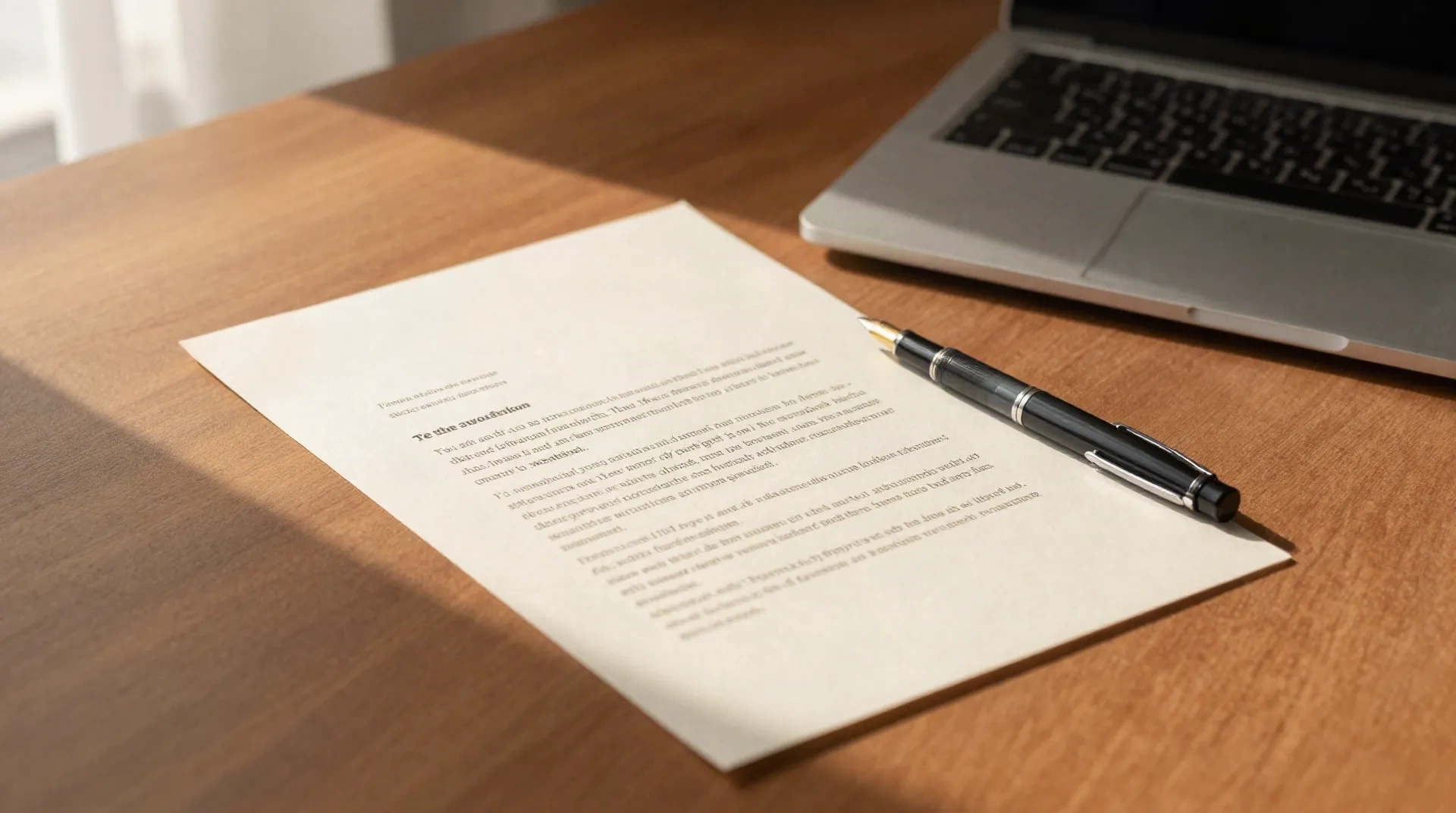
Four lines carry the whole letter
Most resignation letters fail by saying too much. These are the only parts that need to be there.
The decision, first
Open with the fact. I am resigning from my position as Senior Analyst, effective on the date below. No warm-up paragraph, no apology, no hint that it is negotiable.
A precise last day
Write the full date, not 'in four weeks'. A fixed day removes ambiguity for payroll, for your manager, and for you when the notice period is counted later.
A handover offer
One sentence stating you will document open work and brief whoever takes it on. It is the part your manager will remember, so make it specific and make it true.
A civil close
Thank them for something real, then sign off. One honest sentence about what you learned reads better than three of general gratitude.
From blank page to sent in ten minutes
The structure is the same for every resignation. Only your details change.
-
1
Check your contract first
Find the notice period and whether it must be written, posted, or sent to a named person. This takes two minutes and decides the date you will write in the letter.
-
2
Fill in the four lines
Add your name, role, manager, and last working day. The template supplies the remaining sentences in a neutral register that suits a first draft and most real situations.
-
3
Rewrite one sentence
Change the thank-you line so it refers to something that actually happened. This is the only personal part, and it is the part a reader notices.
-
4
Tell them, then send it
Speak to your manager before the email arrives. Send the letter the same day, with your own click on Send, so the record matches the conversation.
When you want it brief and final
Most people resign once every few years and have no standard to copy. Colleagues forward old letters with the wrong dates in them, and search results offer fifteen versions of the same grateful paragraph. A short template gives you a safe starting point that does what a resignation letter has to do and stops there. It works for a standard full-time role, a fixed notice period, and a manager you will still be on good terms with next year.
- Standard employment with a contractual notice period
- Moving to a new employer, with or without a start date confirmed
- Leaving a team you want to hear good things about you later

Three cases to type from scratch
A template is the wrong tool in a few situations. If you are resigning over a safety, legal, or conduct issue, the wording matters and may be read by lawyers, so take advice before you write. If you are negotiating an early release, the letter should reflect what has been agreed in writing. If you are a director or hold statutory duties, your company's rules govern the form. In each case the short version still helps as a skeleton, but the details are yours to write.
- Resignation connected to a grievance or a safety concern
- A negotiated exit with agreed terms or a settlement
- Directors, partners, and roles with statutory notice duties

Common questions about resigning in writing
How long should a resignation letter be?
Do I have to give a reason for leaving?
How much notice should I give?
Should I send it by email or print it?
Can I withdraw a resignation letter after sending it?
What if I am resigning on bad terms?
Does ohboiler write the letter for me?
Write it once, send it calmly
Fill the structure, change one sentence, and press send yourself. The boilerplate disappears. The personal part stays yours.