WORDCRAFT FOR ADULTS · V1

Reusable templates for the things you keep writing twice. Variables that adapt to the recipient. Sentences that still sound like you wrote them.

"The hardest part of writing isn't writing. It's writing the same thing for the fourteenth time." — a Tuesday inbox, anywhere
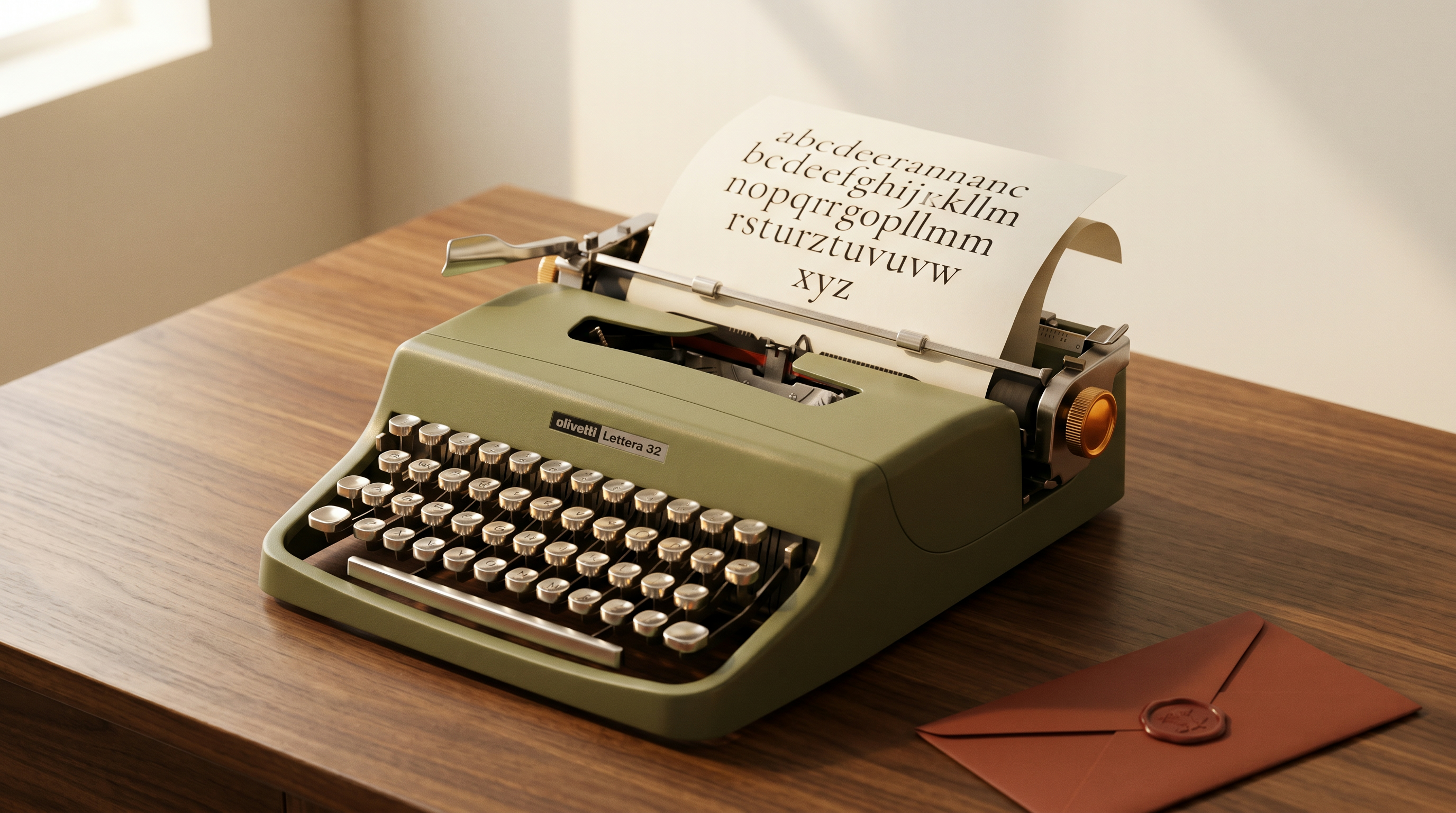
Oh Boiler — vintage Olivetti typewriter on walnut desk with cream paper and wax-sealed envelope
Reusable templates for everything you keep writing twice.
The premise

Templates aren't lazy. Bad templates are.

A good template is a skeleton, not a costume. It saves you the seven sentences nobody enjoys writing — the greeting, the framing, the obligatory close — and leaves the three sentences that actually matter for you, the human, to write.

Oh Boiler is for the writing you do over and over: cover letters tuned per role, cold emails tuned per prospect, performance reviews tuned per direct report. Save the structure once. Keep the variables. Stop rewriting the boilerplate. Start writing what matters.

Subject: Quick note on the {role} role Hi {first_name}, I noticed the {role} opening at {company} and one detail caught me — {specific_detail}. I've spent the last {years} years working on {relevant_work}, and the overlap feels real. A quick story on why I think we'd work well: {soul_paragraph} Happy to send a longer note, or jump on a 20-minute call. — {your_name}

↑ one Oh Boiler template. Variables in terracotta. Soul paragraph in your own words.

How it works

Variables that adapt.

Variable substitution metaphor — left, a template page with [NAME], [ROLE], [COMPANY] placeholders in serif type; warm amber arrow; right, the same page with handwritten names in terracotta ink
Write the structure once. Swap the soul each time.

A variable is a placeholder you fill once per recipient. Names, roles, the inside joke, the specific detail. The skeleton holds. The soul changes. Two filled-out copies read as completely different letters — because they are.

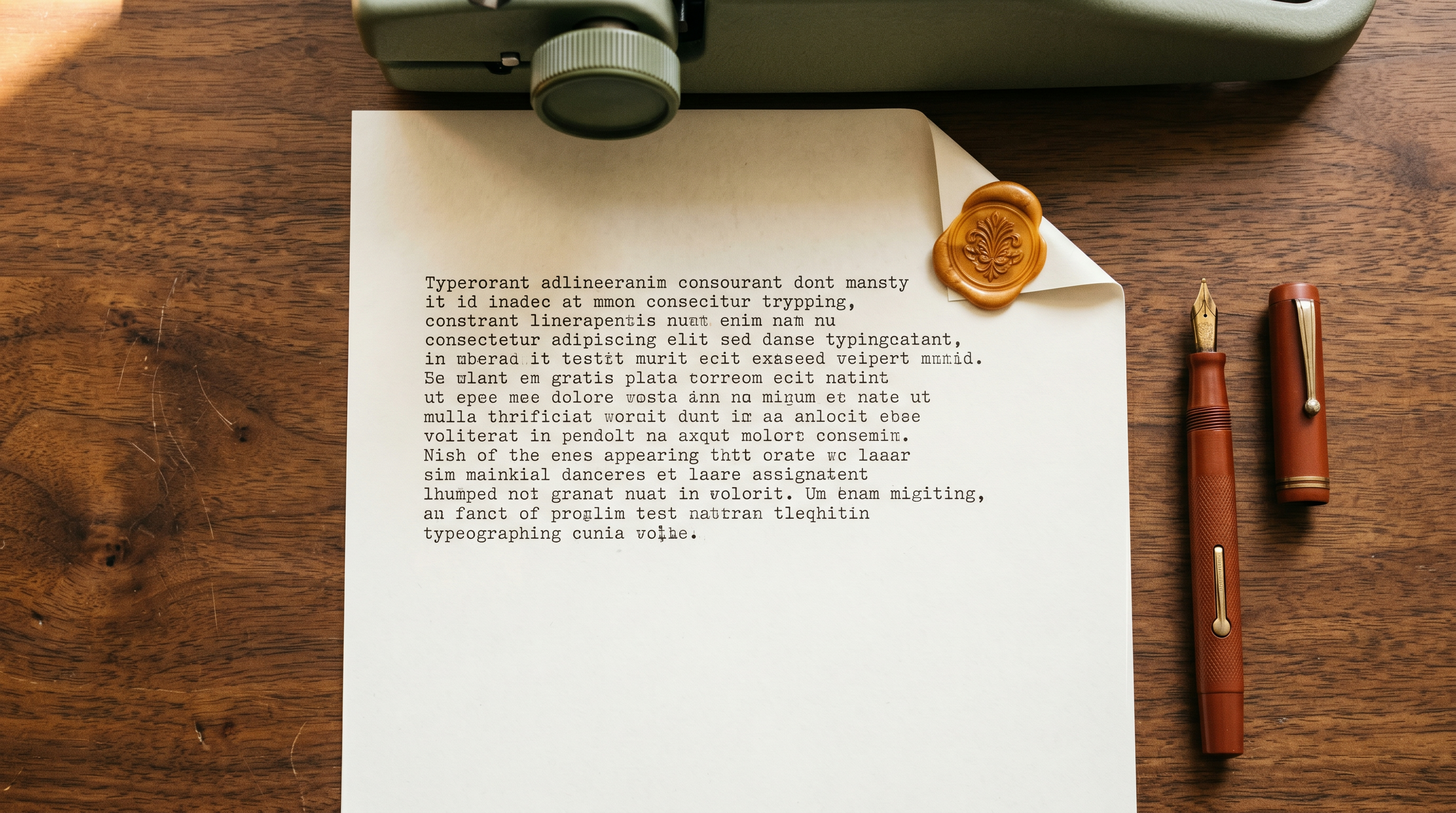
Close-up overhead — single sheet of cream paper with partial typewriter ink letters in elegant serif, warm amber wax-sealed corner, terracotta fountain pen at rest
Eight categories. Always tunable. Forever yours.
Eight starting points

The writing you've already done — once.

Each Oh Boiler template is a structure plus a list of variables. Fill them once per recipient. The body writes itself. The soul stays yours.

01 · Business proposals

Proposals that don't read like a contract appendix.

Open with the problem in their words. Frame the work as a sequence of outcomes, not deliverables. Close with a single, easy next step. Tune the tone per client — boutique studio, mid-market, enterprise — without retyping the spine.

For {client} — we'd structure this in {phase_count} phases over {timeline}. The first deliverable lands by {first_milestone} so you have something tangible inside the first month.
02 · Cover letters

The letter that says I read the job description.

Replace the dreaded "I'm writing to apply for" opener with one specific thing you noticed about the role. Variable per company. Your story stays the same. Save eight versions, never write the boilerplate twice.

The line about {specific_jd_detail} is what made me reread the listing. I've spent {years} years doing exactly this kind of {work_category}, most recently at {last_company}.
03 · Cold emails

Cold, not glacial.

A short opener tied to one observable detail (a launch, a hire, a podcast). A one-sentence reason you're reaching out. A frictionless ask. You'll send forty in an hour and none will read as if you sent forty in an hour.

Saw the {launch} announcement — congrats. The reason I'm writing: {one_sentence_value_prop}. Worth a 15-minute call this {day} or next?
04 · Reports & weekly updates

The Monday update, sent on Monday.

Three sections: shipped, blocked, looking ahead. Five bullets max per section. Variables for the numbers, the names, the dates. Your team learns the shape of your week in one glance. No more 600-word essays at 11 p.m. Sunday.

Shipped — {wins_count} wins this week, including {headline_win}. Blocked — {blockers}. Looking ahead — {next_priority}.
05 · Newsletters

A newsletter that respects the inbox.

An opening anecdote slot. A "what I'm working on" slot. A reading list slot. A sign-off that sounds like you, every time. Variables for the subject hook and the one thing the reader should actually click. Boilerplate killed the indie newsletter — Oh Boiler revives it.

This week — {opening_anecdote}. What I'm working on — {wip_summary}. Reading — {three_links}. Until next {weekday}.
06 · Customer onboarding

The welcome email that reads like a real person wrote it.

Greeting variable per plan tier. A first-week roadmap with three concrete actions. A "we read every reply" footer that's actually true. Stop sending the same "Welcome to [PRODUCT]!" email your competitors send.

Welcome — and thank you for picking {plan_name}. In the first 48 hours, the highest-leverage thing you can do is {first_win}. By day seven, most folks are at {week_one_milestone}.
07 · Performance reviews

The review that doesn't sound like HR wrote it.

Strengths section with three observed examples. One growth area framed as a goal, not a deficit. A line about the next six months together. Variables for names, projects, and the specific feedback. The hardest writing of the year, halved.

This year, {name} shipped {notable_project}, raised the bar on {strength_area}, and grew visibly in {growth_area}. The thing I'd love to see next is {next_stretch}.
08 · Birthday & life-event messages

Specific, in the time it takes to make coffee.

For the 80 people whose birthdays you remember and the 14 you actually want to write a real note to. Variables for the inside joke, the shared memory, the thing they're working on. Personal in 90 seconds, not awkward in eight.

Hey {name} — thinking of you on the {milestone}. Still laugh about {shared_memory}. Hope {current_thing} is going well. More soon.
Templates in the wild

One desk. A dozen Tuesdays.

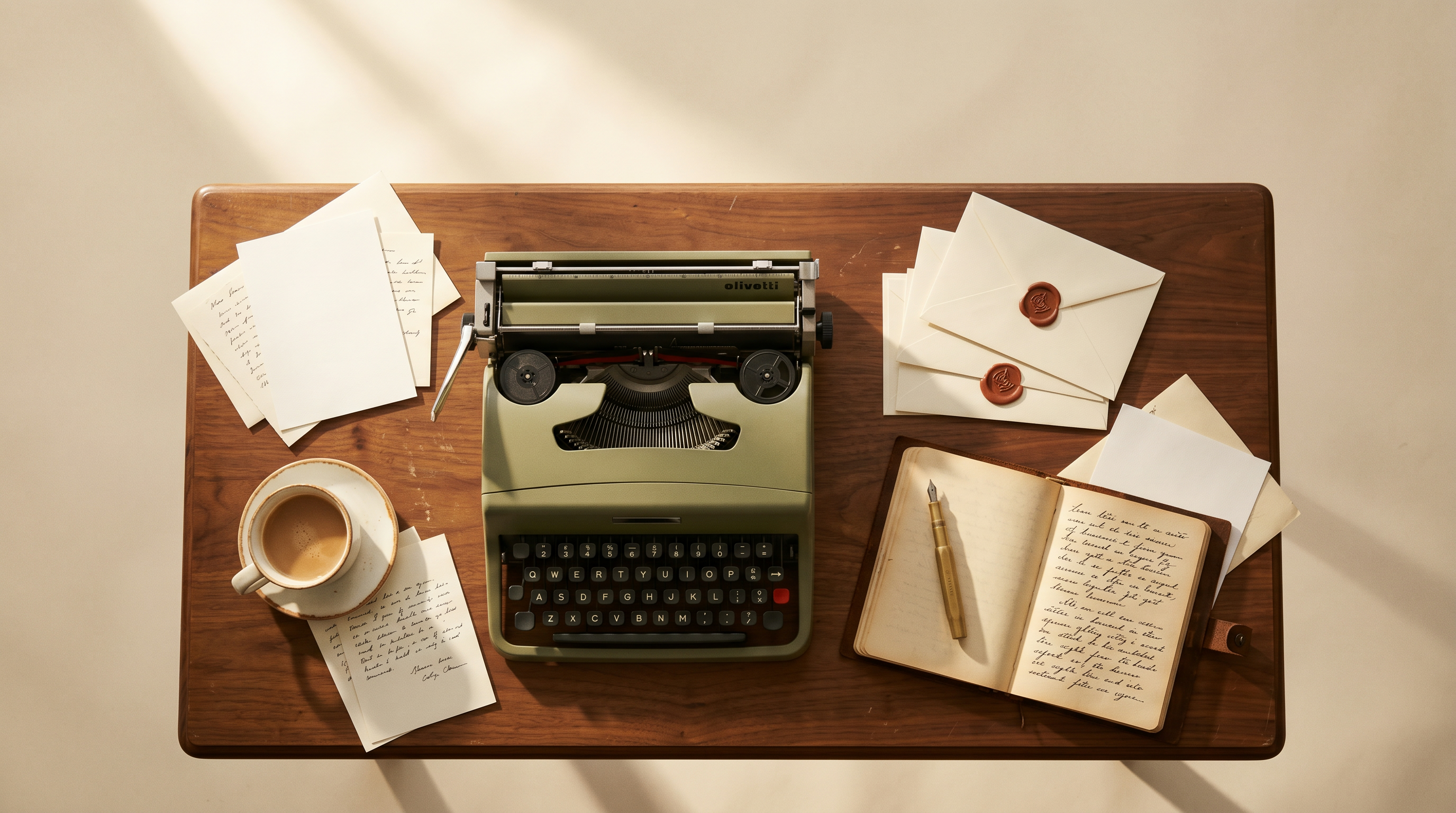
Wide writer's desk overhead — vintage Olivetti typewriter, three stacked terracotta wax-sealed envelopes, leather notebook, brass pen, coffee cup, warm afternoon light
Cover letters. Cold emails. Proposals. Birthday messages. All recyclable.
Before & after

The same email, two Tuesdays apart.

Click each card.

Tuesday, before

"Hi Sarah, I hope this email finds you well. I'm writing to follow up on our previous conversation regarding the upcoming Q2 deliverables. As we discussed, I wanted to circle back to ensure alignment on…"

Click to flip →
Tuesday, after

"Sarah — quick Q2 check-in. The shipping date holds. The blocker is sign-off on the security review. Can you ping Jane today? Saves us a week."

← Click to flip back
Cover letter, before

"I am writing to express my keen interest in the Senior Product Designer position at your esteemed company. With over seven years of experience in the field, I believe I am a strong candidate…"

Click to flip →
Cover letter, after

"The line in the JD about owning the new B2B onboarding flow is why I'm writing. I spent the last three years rebuilding ours — moved activation from 38% to 61% — and I'd love to do it again, here."

← Click to flip back
The argument

A short defense of the template.

Somewhere between "Hi, I hope this finds you well" and the last paragraph of a corporate apology, the English language got tired. Boilerplate isn't the failure of writing — it's the failure of caring about which sentences are worth writing twice and which aren't.

Oh Boiler is built on a simple belief: the only sentences worth writing fresh every time are the ones that carry the actual signal. The greeting, the close, the framing — those should be a structure you set once, and never think about again. Save your attention for the line that matters. The one with the specific detail. The one that, when they read it, makes them pause.

"Writing is the act of choosing which two sentences to keep, and which six were merely throat-clearing. Oh Boiler removes the throat-clearing. The choosing stays yours." — from the welcome doc
Who it's for

Built for people who write the same email two hundred times a year and still get it slightly wrong every time.

Recruiters. Founders. Studio leads. Account managers. The people whose inbox is the work, and who've quietly given up on sounding fresh by the fortieth Tuesday. Oh Boiler is for the writer who knows what good looks like — and is tired of starting from a blank page every time.

You'll keep the voice. You'll keep the structure. You'll lose the seven sentences of throat-clearing nobody enjoys writing. Tuesday afternoon, returned to you.

Over-the-shoulder portrait of a writer at a vintage walnut desk with a typewriter, warm afternoon light spilling from a tall window
A working writer, on the third Tuesday of the month.
Featured

Three of our most-saved templates.

Built by working writers, refined across hundreds of uses, free on every plan.

Most saved · 2026

The 12-line cold email.

Twelve lines, eight variables. Built to land replies, not perform sincerity. Used by 4,300 founders in the last quarter.

8 variables · 12 lines · < 90 seconds to fill

Editor's pick

The Friday wins email.

Three sections, fifteen variables. Your team sees the week in a glance. Your manager stops asking what you did this week. Sundays return to you.

15 variables · 22 lines · < 4 minutes to fill

New

The performance-review skeleton.

Strengths in threes. One growth area, framed as a goal. A closing paragraph that sounds like the manager you are, not the form you're filling out. Halves your review week.

11 variables · 38 lines · ~18 minutes per direct report

Pricing

Three plans. No annual lock.

Free starter. A Pro plan for working writers. A team plan for the company that's tired of its own boilerplate.

Free starter

$0

For one writer, finding their templates.

  • 5 active templates
  • Unlimited variables per template
  • Export to clipboard, plain text, Markdown
  • Browser extension (Chrome, Firefox)
Start free

Team

$39/ mo · user

For the company writing the same things in five voices.

  • Everything in Pro
  • Shared template library
  • Brand voice presets
  • SSO (Okta, Google Workspace)
  • Admin controls & audit log
  • Slack-native sharing
Talk to sales
Questions, asked often

The things people ask before signing up.

Is this just snippets, with a fancier name?

No. Snippets paste a fixed block. Oh Boiler templates hold variables — first name, role, the inside joke, the launch you noticed — and prompt you to fill them per recipient. The body is the boilerplate. The soul (the variable content) is yours. The result reads like a letter, not a Mad Lib.

Does it write the variables for me with AI?

If you want. The Pro plan includes AI fill assist for any variable — paste the JD, the LinkedIn profile, the company's last blog post, and Oh Boiler drafts the variable content. You edit it before sending. The structure is yours; the soul of the message is yours; the AI helps you not stare at a blank field for ten minutes.

Why not just use ChatGPT?

You can. But you'll write the same prompt for the eighth time on a Tuesday, get an inconsistent voice, and lose the structural choices that made the message land last time. Oh Boiler is the storage layer between you and a model: your structures, your voice presets, your per-contact memory. The model is a tool you summon when you need it, not a thing you wrestle with from scratch.

What stops this from sounding generic?

Two things. First, the structure: our templates are built by working writers, not committee-tested. Second, the variables: most templates have between 6 and 15, which is enough specificity that two filled-out copies read as completely different letters. The boilerplate is invisible. The soul is yours.

Where does my data live? Do you train on it?

Your templates and recipient memory live in our database in the EU (Frankfurt). We never train models on your content. AI fill assist sends only the prompt content you explicitly send, to the model you explicitly pick, and we don't retain it. Full data export in plain JSON, anytime.

Will the people I write to know I used a template?

No — and that's the point. Because the structure is invisible and the variables are specific, a filled-out Oh Boiler template reads as a letter someone wrote on a Tuesday afternoon. Which is exactly what it is, only the Tuesday afternoon happened once, and the letter happens forty more times.

One more thing

Save the structure. Keep the soul.

Start free. Five templates, no card. Find the three you'll use forever. Upgrade when your boilerplate's worth more than a coffee.